Metanoic Echos
Introduction
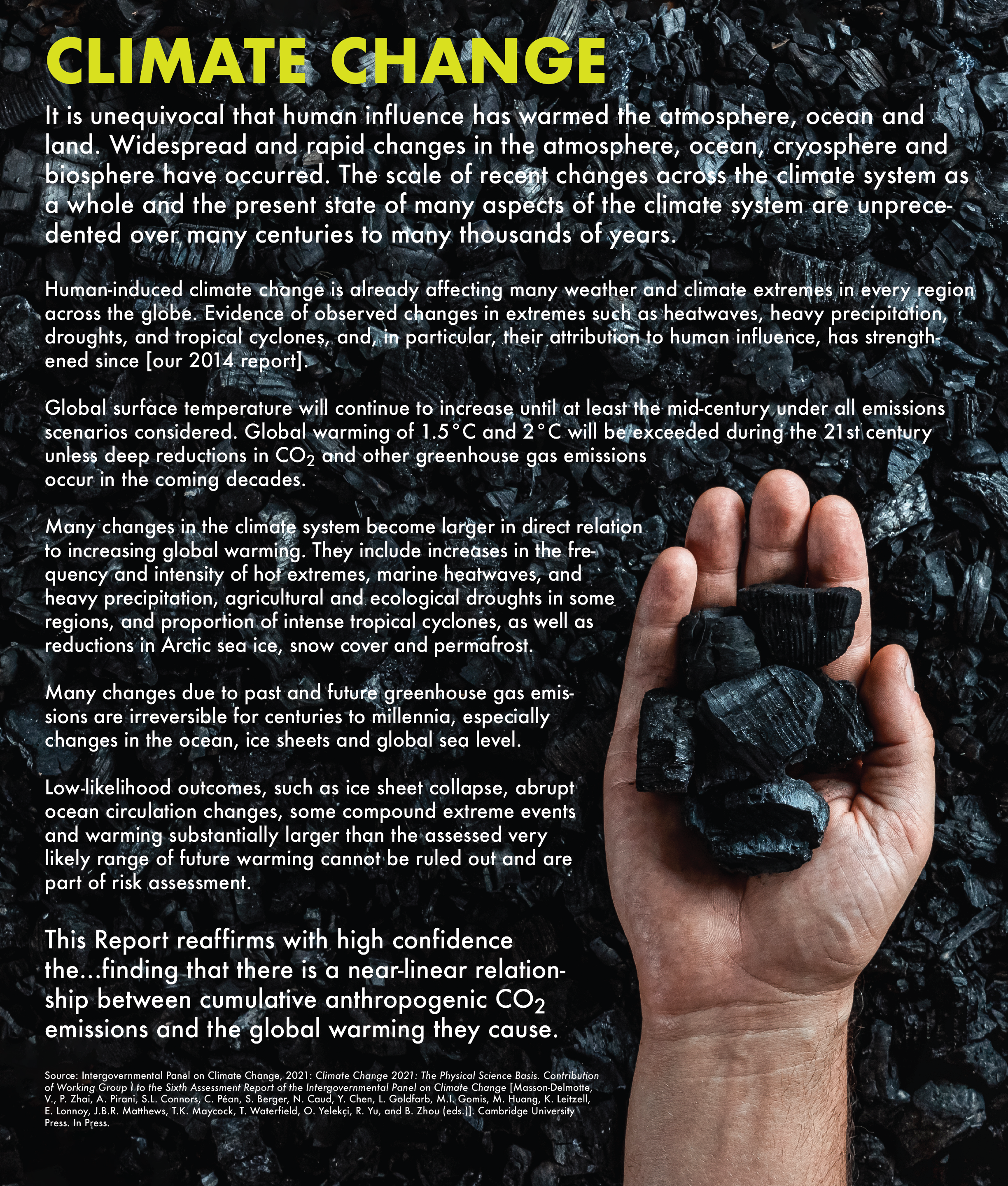
According to NASA:
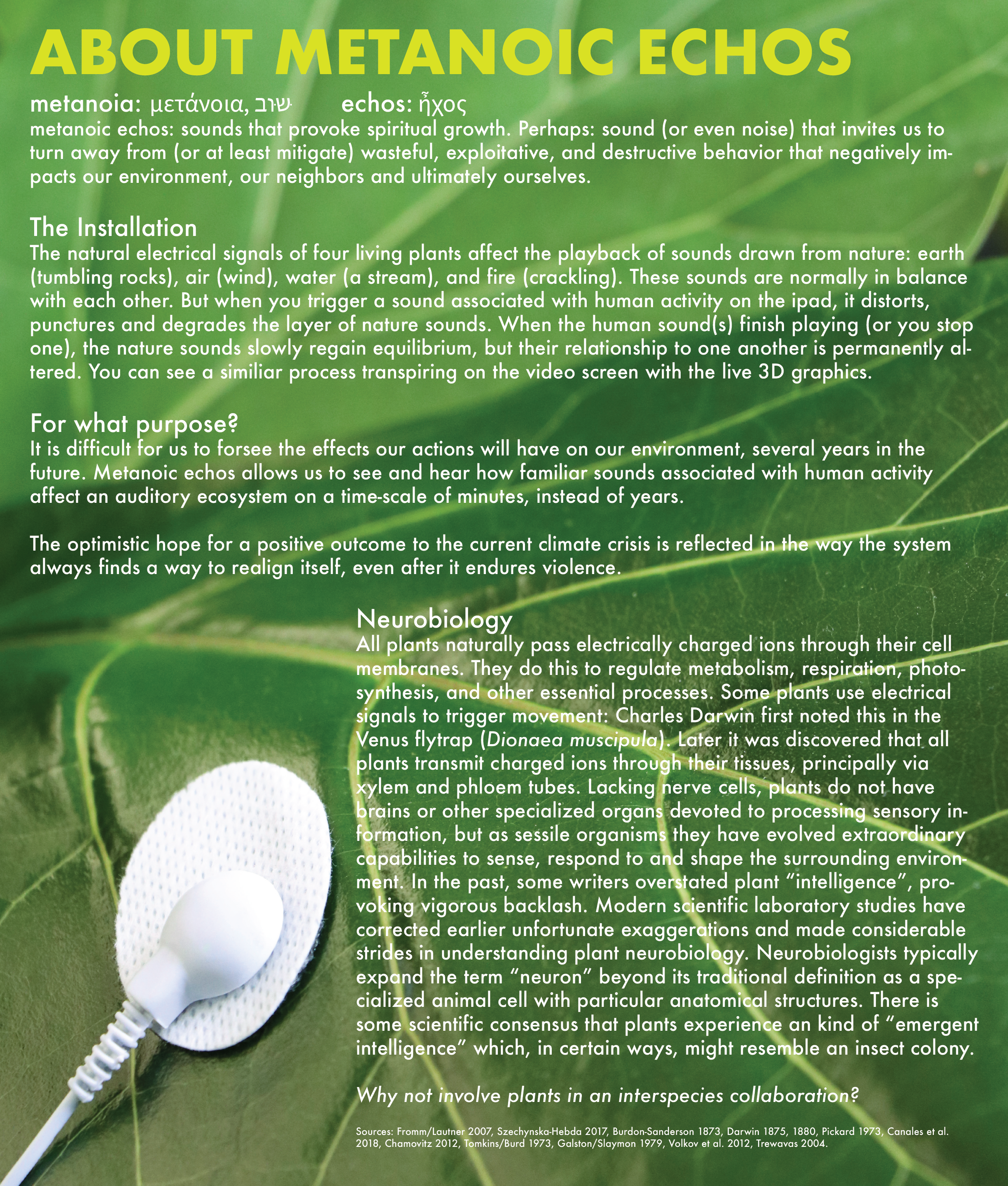
Metanoic Echos: sounds that provoke spiritual growth. Sound (or even noise) that invites us to turn away from (or at least mitigate) wasteful, exploitative, and destructive behavior that negatively impacts our environment, our neighbors and ultimately ourselves.
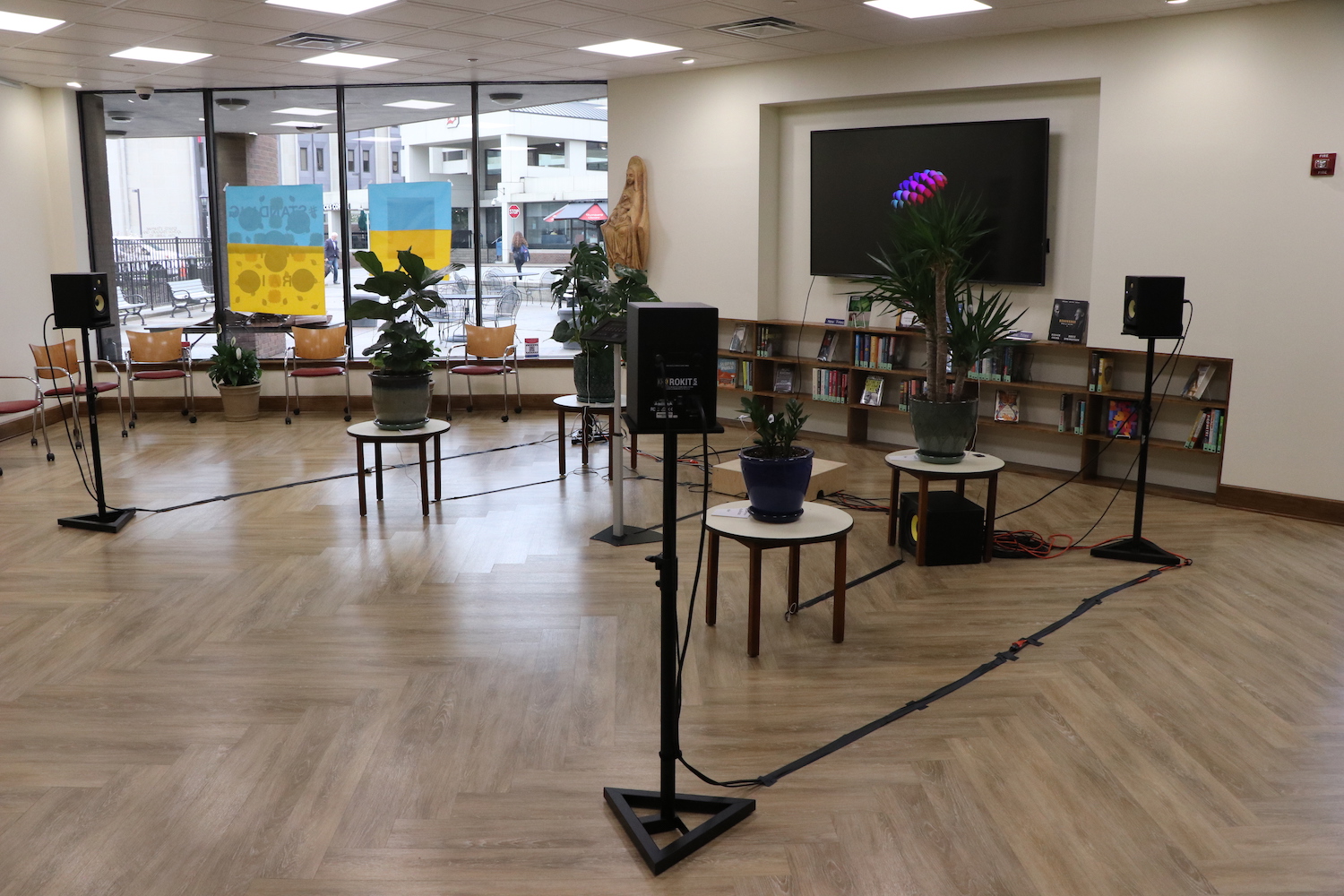
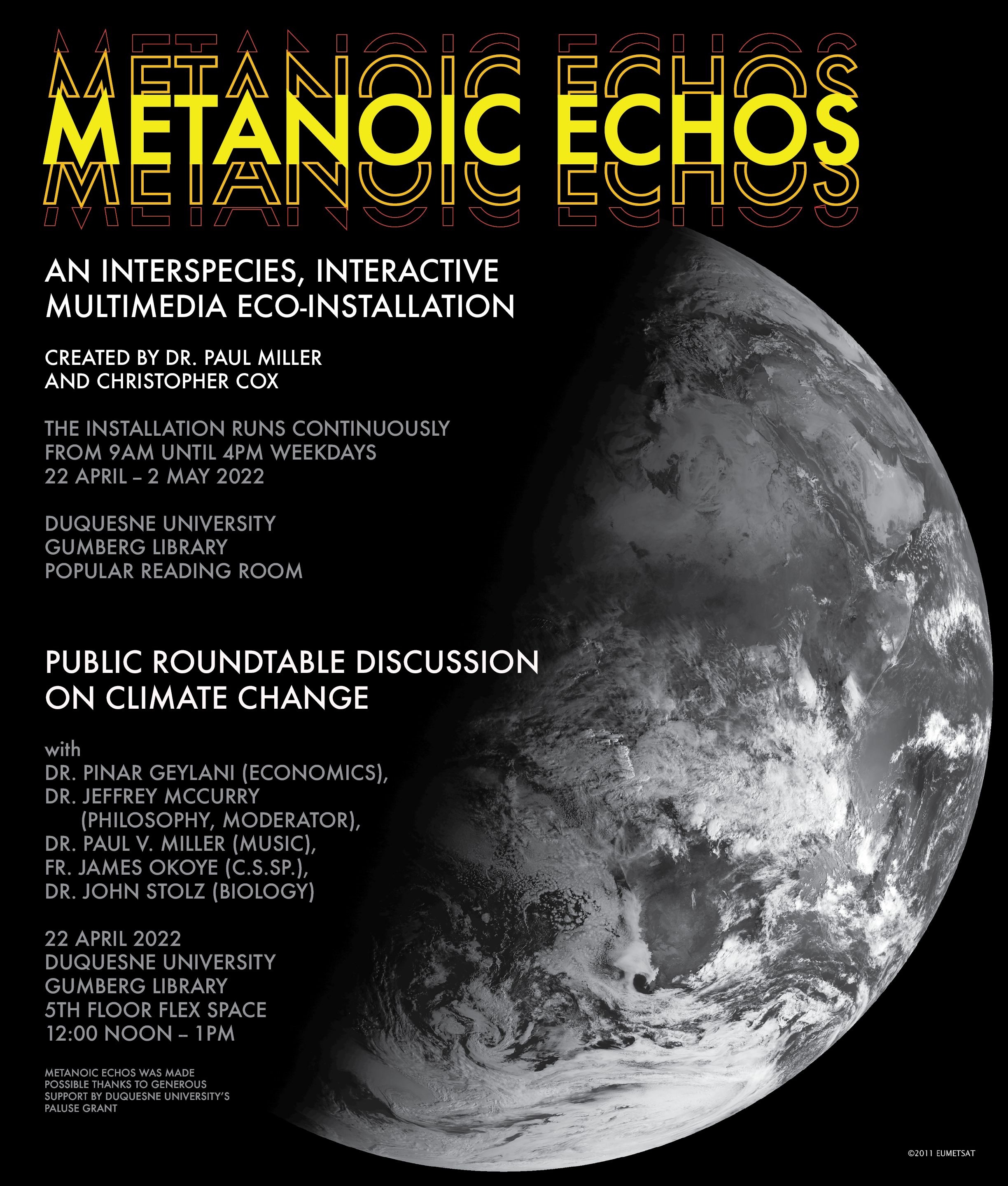
The installation ran from 22 April -- 2 May 2022, weekdays, from 9am to 4pm at Duquesne University's Gumberg Library. It was free and open to the public.
The purpose of the installation was to bring awareness to the current climate crisis that we all face. It did this through an interactive sound and video design that incorporates the autonomous electrical signals of four living plants.
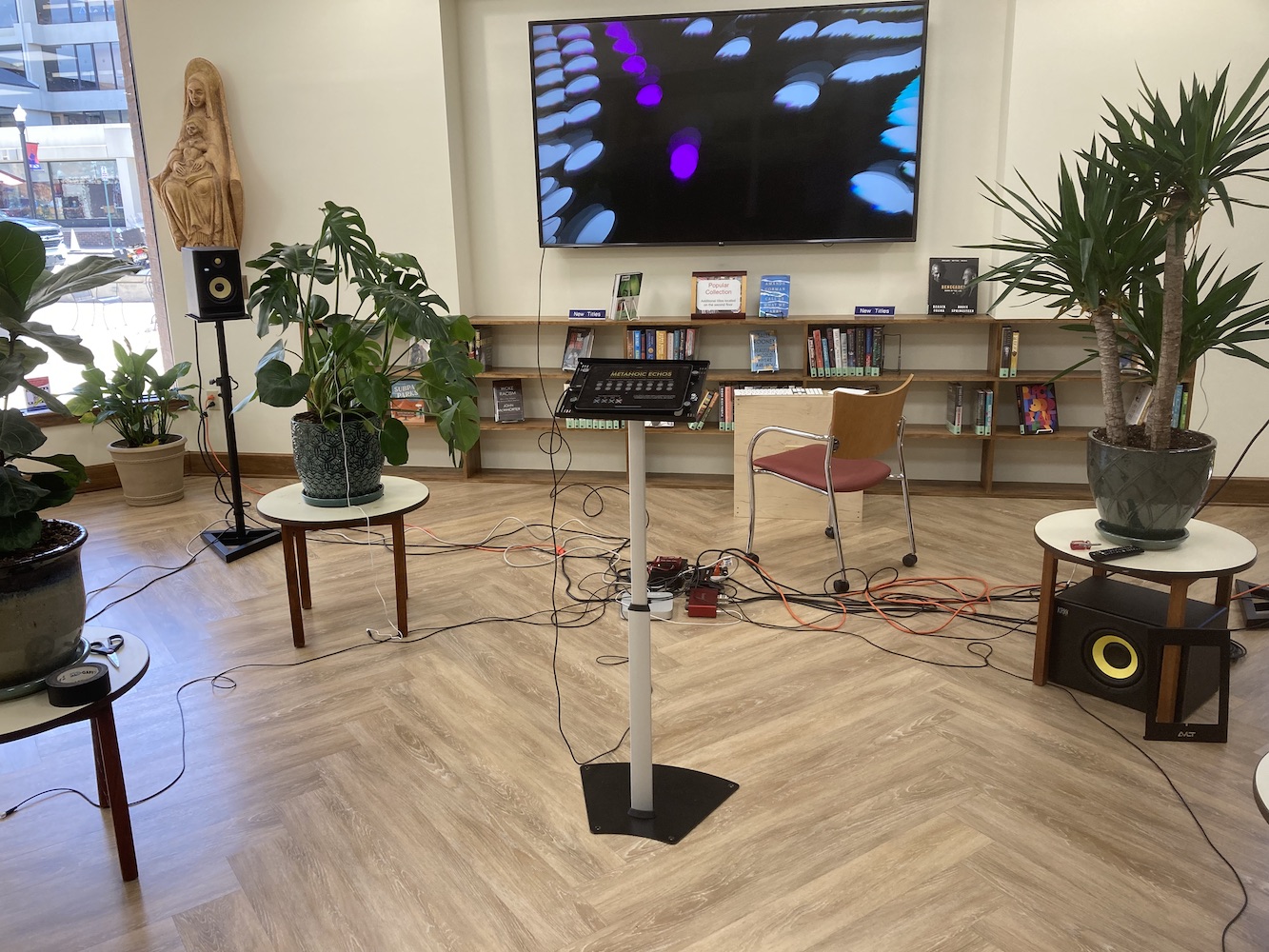
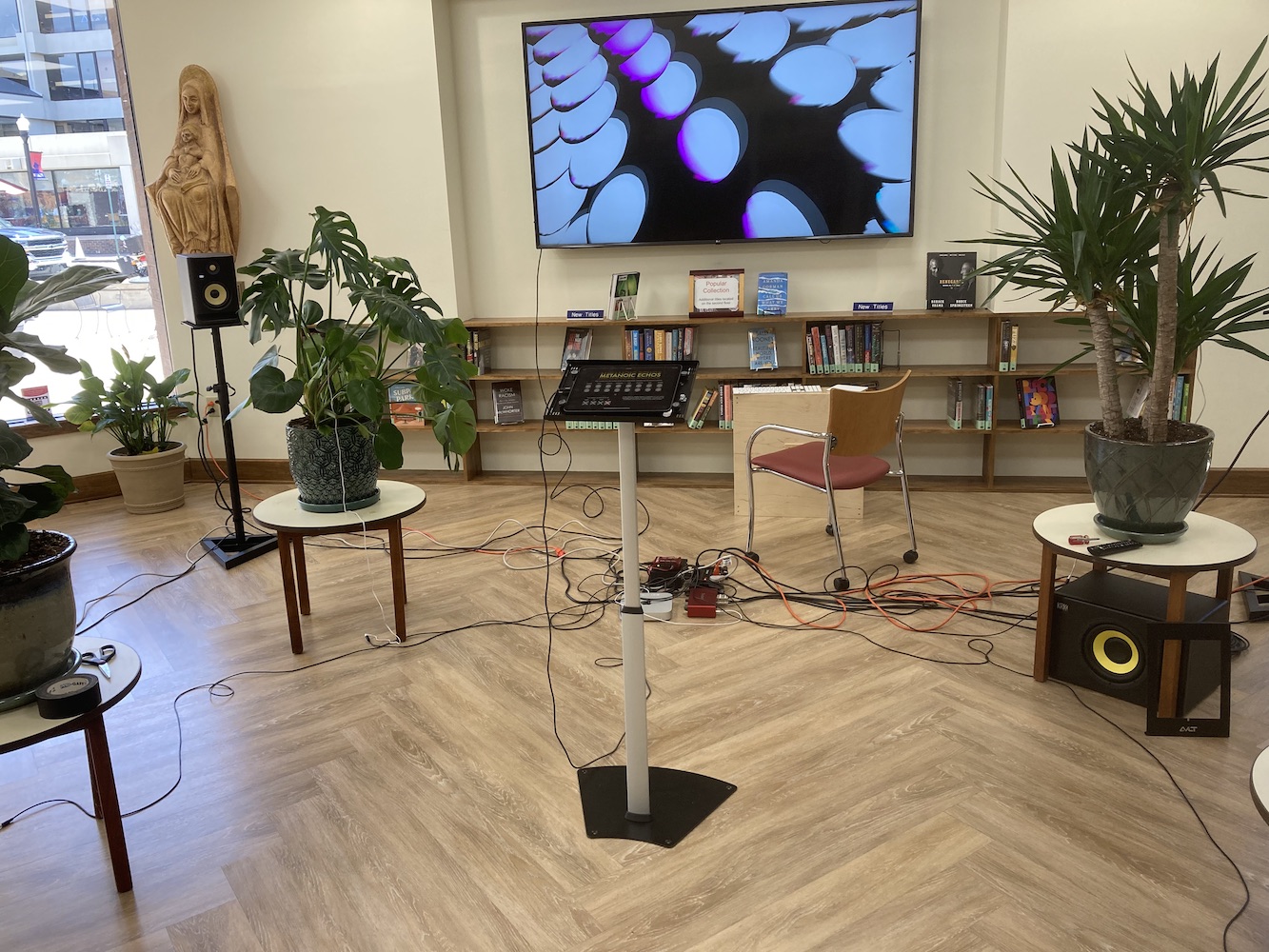
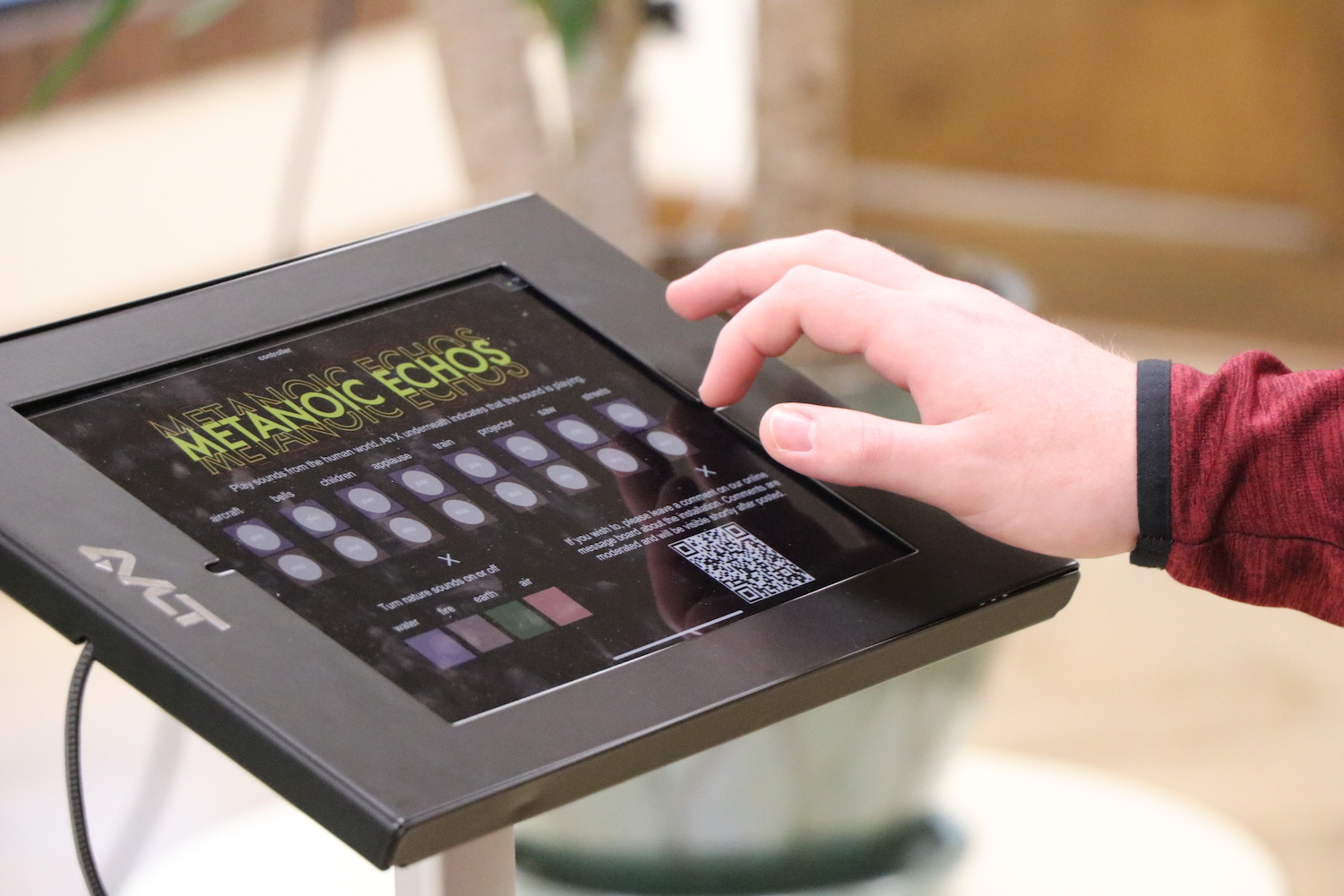
Metanoic Echos provoked visitors to interact with the ambient bioelectric soundscape, by inviting people to trigger sounds from the human world which distort, puncture and deform four superimposed layers of natural sound.
There was also a roundtable discussion on the topic of climate change at the Gumberg Library's 5th floor Flex Space at noon on 22 April 2022 (Earth Day). This was recorded and is available by request. Participants included: Dr. Paul Miller (music), Dr. Pinar Geylani (economics), Fr. James Okoye (theology), and Dr. John Stolz (biology). The rountable wasmoderated by Dr. Jeffrey McCurry (philosophy).
You can view the installation on this web site, where you can find numerous images, videos, and reactions. This installation was the fruit of three peoples' work: Paul Miller, Christopher Cox and Brian Riordan.
Technology and Purpose
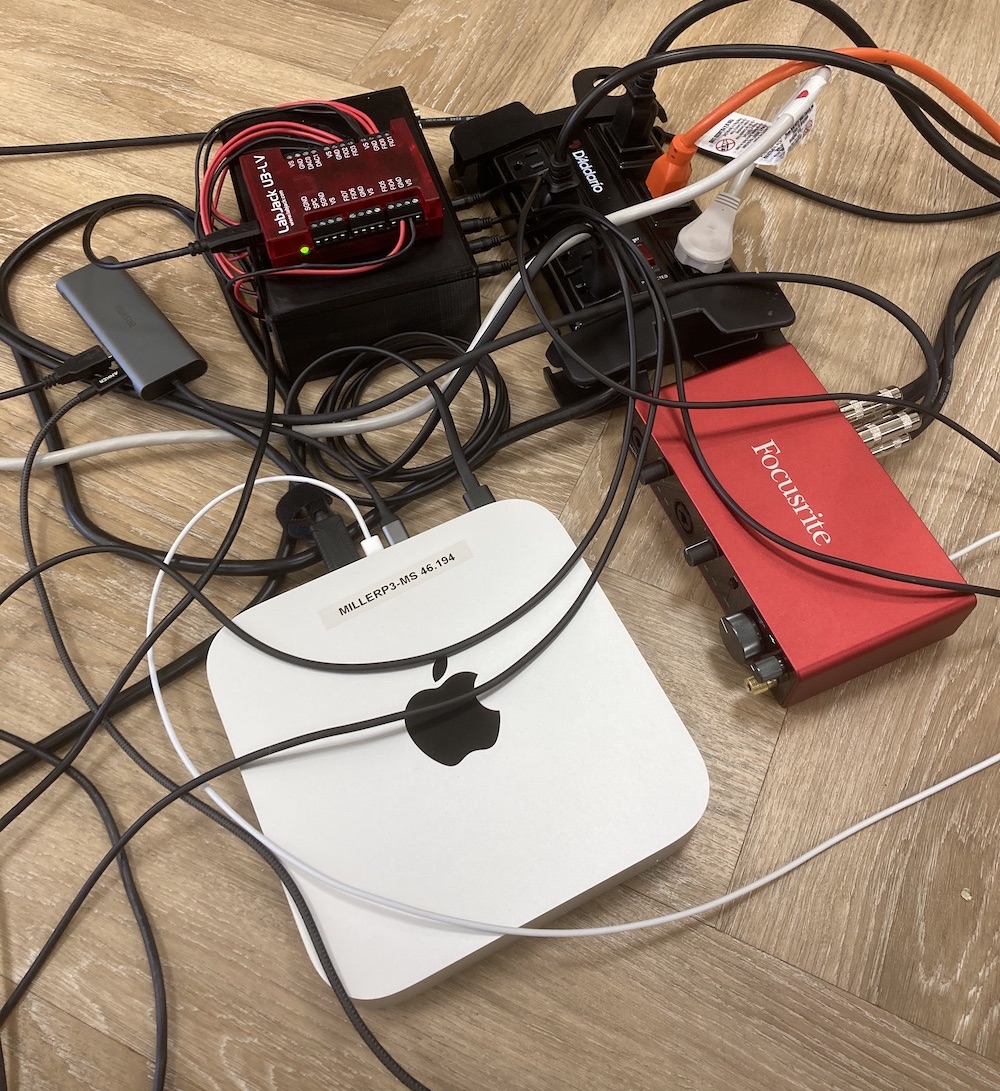
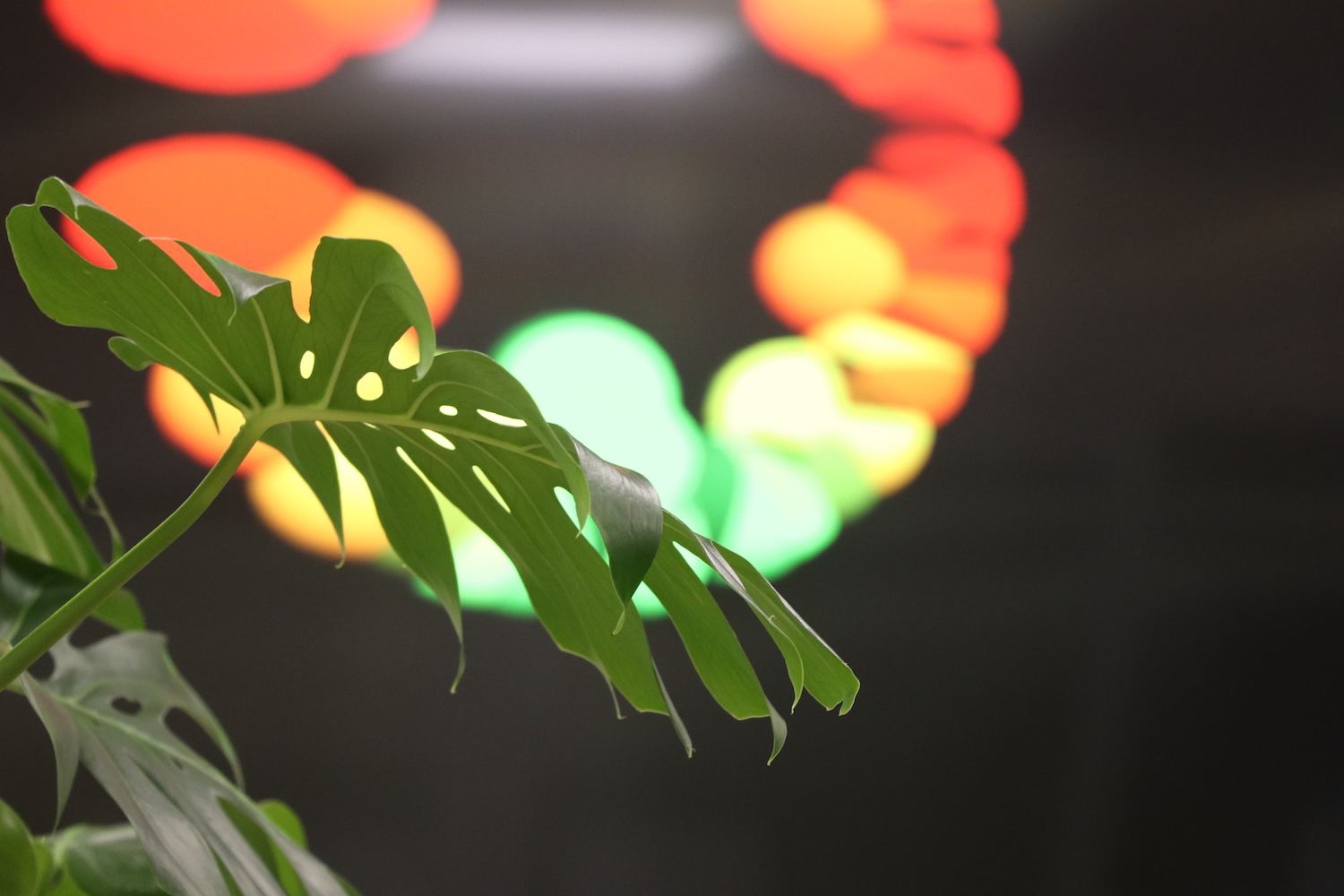
The natural electrical signals of four living plants affect the playback of sounds drawn from nature: earth (tumbling rocks), air (wind), water (a stream), and fire (crackling). These sounds are normally in balance with each other. But when you trigger a sound associated with human activity on the ipad, it distorts, punctures and degrades the layer of nature sounds. When the human sound(s) finish playing (or you stop one), the nature sounds slowly regain equilibrium, but their relationship to one another is permanently altered. You can see a similiar process transpiring on the video screen with the live 3D graphics.
It is difficult for us to forsee the effects our actions will have on our environment, several years in the future. Metanoic echos allows us to see and hear how familiar sounds associated with human activity affect an auditory ecosystem on a time-scale of minutes, instead of years.
The optimistic hope for a positive outcome to the current climate crisis is reflected in the way the system always finds a way to realign itself, even after it endures violence.
Images and Video

Reactions
During the installation, there was a page on this site where visitors could contribute their thoughts or ask a question. Here's what people wrote about their experience!